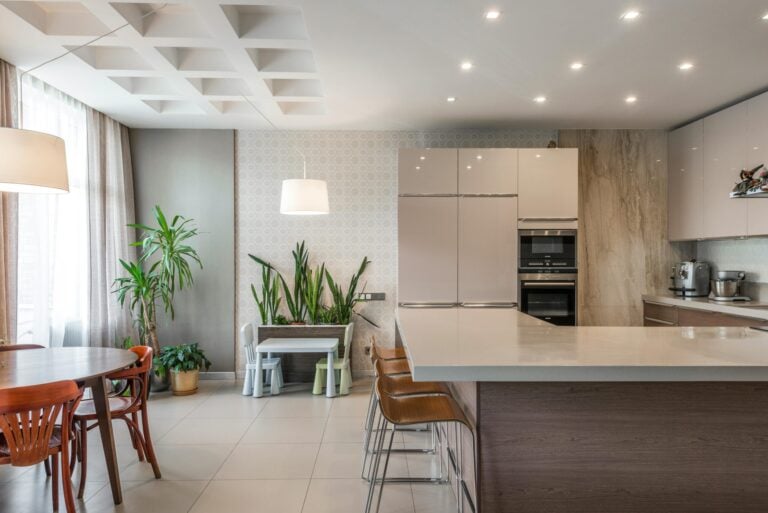
Design Ideas for a More Sustainable Dining Room and Kitchen
As individuals become increasingly aware of the need for climate action, sustainability now takes priority in shopping behaviors and daily…
If you live near a busy road, a school, a commercial district or an active neighborhood, you already know that urban noise can be more than a minor annoyance. Green infrastructure offers a practical solution. Trees, living walls and rain gardens can help soften and redirect sound while also providing shade, cleaner air and habitats for wildlife. These benefits make nature-based noise control appealing for cities and individual properties.
Noise pollution is increasingly recognized as a public health issue. The World Health Organization identifies environmental noise as one of the most important risks to health, as it can have cardiovascular effects, cause sleep disturbance and affect overall well-being.
According to the AIRCARD 2025 prospective cohort study, a 14.9-decibel increase in road traffic noise was associated with a 7.5% higher risk of major heart-related events and an 8.1% higher risk of all-cause mortality. Long-term exposure to road traffic noise has also been linked to a higher risk of Parkinson’s disease. This is why noise reduction landscaping is important to consider.
Trees reduce noise levels by absorbing sound energy and by masking unpleasant sounds with more natural ones, such as rustling leaves and bird calls. This is the foundation of acoustic landscaping, which combines plants, landforms and materials to interrupt sound transmission.
While a single tree does not create silence, a layered landscape may noticeably change how sound is perceived. Dense plantings create multiple surfaces that sound waves must pass through, becoming natural sound barriers.
For a typical U.S. property, the goal is often a softer acoustic environment, not complete silence. Sound-barrier plants commonly include eastern red cedar, arborvitae, holly, wax myrtle and other evergreen trees that maintain foliage year-round. Pairing taller trees with medium-height shrubs usually performs better than a single row of plants.
Living walls, also called green walls or vertical gardens, are especially valuable where space is limited. They consist of plants grown on or attached to a wall system, creating a vegetated surface that can absorb and diffuse sound. The combination of leaves, growing media and air pockets helps reduce sound reflection from hard building surfaces.
The green infrastructure benefits of living walls extend beyond noise reduction to also help reduce the thermal energy absorbed by a building’s exterior, preventing heat from transferring indoors and lessening the need for air conditioning. Living walls are not a replacement for a large vegetated buffer, but they can be effective near patios, courtyards, balconies and urban homes where there’s limited ground space.
Vegetation is often most effective when combined with built barriers. A solid privacy fence can block a direct path between a noise source and your outdoor living area, while plants soften reflections and enhance aesthetics. Most residential fences reduce noise by roughly 5 to 10 decibels, depending on height, material and installation quality.
Taller solid fences made of dense materials provide the greatest improvement, particularly for traffic and neighborhood noise, although they do not completely eliminate sound. A fence works best as one component of a broader green infrastructure approach rather than as a stand-alone solution.
An integrated approach is especially useful in dense neighborhoods where space for wide vegetated buffers is limited. A six- to eight-foot fence backed by evergreen shrubs and small trees can create a quieter and more private outdoor space than either element could provide alone.
Many urban surfaces are acoustically hard. Conventional concrete and asphalt reflect sound, allowing tire noise and footsteps to bounce through the environment. Permeable pavement systems contain a large percentage of voids that absorb water and a great deal of sound.
While primarily installed for drainage, porous pavements can reduce tire-road noise compared with traditional dense pavement surfaces. For homeowners, a permeable driveway, walkway, or patio may contribute to a quieter outdoor space while reducing runoff and supporting groundwater recharge. In a neighborhood setting, the widespread use of permeable surfaces can help create a less reflective acoustic environment overall.
Start by identifying the main noise source and the area where you spend most of your time outdoors. Then think in layers. A solid barrier closest to the noise source, evergreen shrubs behind it, taller trees farther back and permeable surfaces in gathering areas.
Aim to reduce the sharpness and intrusiveness of noise rather than to eliminate every sound. Even small reductions can make conversation easier and outdoor spaces feel more restful. The psychological effect of seeing greenery is also important. Spending time in nature has been scientifically linked to reduced stress, an improved mood and enhanced brain function.
You can also implement a native landscape into your natural sound barrier. Since native plants are adapted to the local climate and soil, they are easier to maintain than non-native species. They naturally spread and outcompete weeds, reducing the need for frequent manual weeding. Native plants also enrich the soil with nutrients, which promotes a healthier environment for all the vegetation in your landscape.
Urban noise may never disappear entirely, but it can be reduced substantially through thoughtful landscape design. Trees absorb and scatter sound, living walls soften hard surfaces, and permeable pavements reduce acoustic reflection while managing stormwater. When combined with well-designed fences and layered plantings, these strategies can support healthier outdoor environments without sacrificing sustainability goals.