
9 Simple Ways to Reduce Your Carbon Footprint Through Thoughtful Purchases
Having a completely sustainable lifestyle isn’t something you can adopt overnight, but we all can become more conscious consumers in…
The construction industry plays a major role in shaping how we live, work, and interact with our environment. As concerns about resource use and climate impact continue to grow, sustainable construction has become an important part of responsible development. Through thoughtful planning, material selection, and building practices, we can create structures that reduce environmental impact while supporting healthier communities.
Why Sustainability Matters in Construction
Buildings require significant amounts of energy, water, raw materials, and land throughout their lifecycle. From construction and operation to renovation and demolition, each stage can affect the environment.
Sustainable construction focuses on reducing resource consumption and minimizing waste. It also considers long-term building performance rather than only initial construction costs. When developers, contractors, architects, and property owners prioritize sustainability, projects can contribute to lower emissions, reduced energy demand, and improved environmental outcomes.
Communities also benefit from buildings that operate more efficiently. Lower utility costs, improved indoor air quality, and reduced environmental impact can create advantages for both occupants and property owners.
Choosing Sustainable Building Materials
Material selection has a direct influence on a building’s environmental footprint. Sustainable materials often require fewer resources to produce, generate less waste, or offer longer service lives.
Recycled steel, reclaimed wood, recycled concrete aggregates, and rapidly renewable materials are commonly used in environmentally conscious projects. Locally sourced materials can also reduce transportation-related emissions while supporting regional suppliers.
Durability is another important factor. Materials that last longer often reduce replacement needs and lower overall resource consumption throughout the life of a building.
Improving Energy Efficiency
Energy efficiency remains one of the most effective ways to reduce a building’s environmental impact. Modern construction projects often incorporate features that reduce heating, cooling, and lighting demands.
High-performance insulation, energy-efficient windows, LED lighting, and advanced HVAC systems can significantly lower energy consumption. Building orientation and natural daylighting strategies may also reduce reliance on artificial lighting and mechanical systems.
Renewable energy technologies such as solar panels are becoming increasingly common in residential, commercial, and institutional projects. These systems can help offset electricity use and reduce dependence on traditional energy sources.
Managing Water Responsibly
Water conservation is another key element of sustainable construction. Buildings can be designed to reduce water use through efficient fixtures, smart irrigation systems, and water-saving appliances.
Rainwater collection systems and drought-tolerant landscaping can further reduce demand on municipal water supplies. In many regions, these strategies help conserve resources while lowering long-term operating costs.
Construction teams can also reduce water waste during the building process by implementing careful site management practices and monitoring usage throughout the project.
Reducing Waste During Construction
Construction and demolition activities generate large amounts of waste each year. Sustainable projects aim to reduce waste through better planning, material reuse, and recycling programs.
Accurate material estimates can help prevent overordering. Salvaging usable materials from existing structures may divert waste from landfills while preserving valuable resources. Many construction sites now separate recyclable materials such as metal, wood, cardboard, and concrete to support more responsible waste management.
Site preparation can also contribute to sustainability goals. For example, soil stabilization solutions may reduce erosion, improve site conditions, and limit the need for additional imported materials during construction.
Supporting Long-Term Building Performance
Sustainability extends beyond project completion. Buildings should be designed to perform efficiently for decades while adapting to changing needs.
Flexible layouts, durable materials, and efficient systems can help extend a building’s useful life. Regular maintenance and performance monitoring also support long-term environmental and financial benefits.
Building certifications and performance standards can provide useful frameworks for evaluating sustainability goals and measuring results. These programs often encourage continuous improvement throughout a building’s lifecycle.
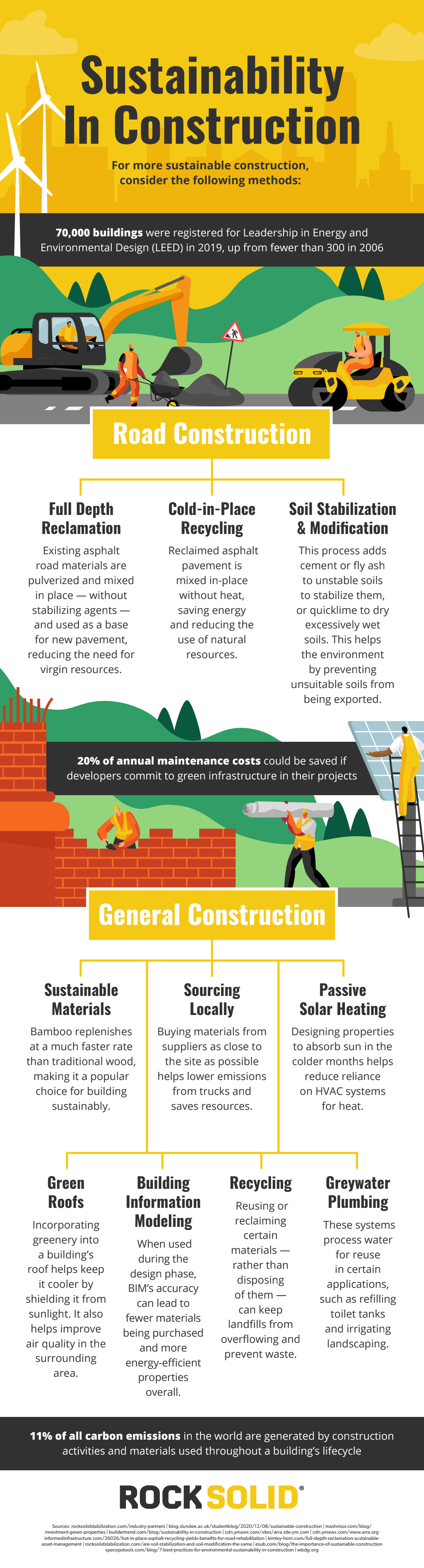
Sustainable construction is an ongoing effort that requires collaboration across the entire building industry. We can support a greener future by choosing efficient designs, responsible materials, waste reduction strategies, and resource-conscious building practices. Every project presents an opportunity to make choices that benefit both people and the environment, so the next step is to prioritize sustainability in planning, construction, and long-term building management. Look over the infographic below to learn more.